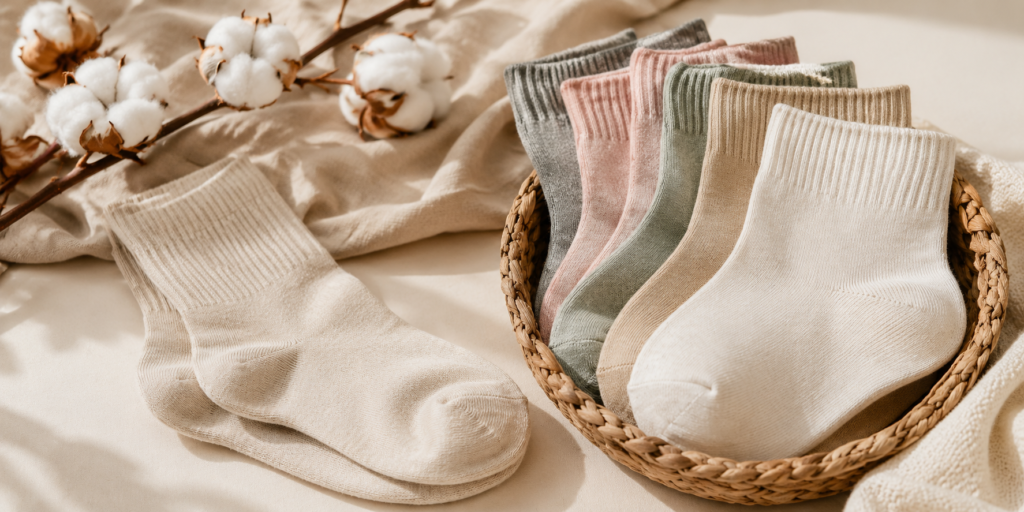
The best men cotton socks manufacturer in India should offer certified combed cotton yarn (80%+ cotton blend), low minimum order quantities (MOQ), in-house knitting and finishing units, transparent pricing, and proven export or bulk-supply experience. Look for manufacturers with quality certifications (ISO/OEKO-TEX), sample-before-bulk policies, and verifiable client reviews. Yadav Products meets all these benchmarks, making it a dependable choice for retailers, wholesalers, and brands across India.
If you’re a retailer, wholesaler, or brand owner sourcing socks in bulk, this guide breaks down exactly what separates a reliable Cotton Socks Manufacturer from a risky one — and how to avoid common sourcing mistakes.
Why Choosing the Right Cotton Socks Manufacturer Matters
India’s hosiery industry produces millions of pairs of socks every month, and Tirupur alone contributes a significant share of the country’s knitwear exports. With so many manufacturers competing on price, quality often becomes the first casualty.
A wrong manufacturing partner can mean:
- Inconsistent sizing across batches
- Poor stitching that leads to returns
- Cotton blends that pill or fade after a few washes
- Delayed shipments that disrupt your retail calendar
A good manufacturer, on the other hand, becomes a long-term supply chain partner — not just a vendor you order from once.
1. Check the Cotton Quality and Fabric Composition
Not all “cotton socks” are created equal. Many sellers label thin cotton-polyester blends as “100% cotton” to cut costs.
What to ask your manufacturer:
- What is the exact cotton-to-spandex/polyester ratio?
- Is combed cotton or carded cotton used?
- Is the yarn pre-shrunk and colorfast?
Expert insight: Combed cotton (where short fibers are removed before spinning) produces softer, more durable socks with better moisture absorption — ideal for daily-wear men’s socks in India’s varied climate.
A trustworthy manufacturer will happily share yarn specification sheets and even cotton sourcing details on request.
2. Evaluate Manufacturing Capacity and Infrastructure
Ask whether the manufacturer:
- Owns in-house knitting machines (or outsources to third parties)
- Has dedicated finishing, dyeing, and packing units
- Can scale production for seasonal demand (festive season, winter stock)
A manufacturer with end-to-end control over knitting, stitching, and packaging typically delivers more consistent quality than one that subcontracts each stage separately.
| Factor | In-house Production | Outsourced/Job-Work Model |
| Quality Consistency | High | Variable |
| Lead Time | Predictable | Often delayed |
| Customization | Easier | Limited |
| Cost Transparency | Clear | Hidden markups possible |
3. Confirm MOQ (Minimum Order Quantity) and Pricing Flexibility
Bulk buyers and small retailers have different needs. Before finalizing a manufacturer:
- Ask for their standard MOQ per design/size
- Check if they offer tiered pricing for larger orders
- Confirm if sample orders are available before bulk commitment
Practical tip: Always request a sample batch first — even a small one. It costs little but saves you from a costly bulk-order mistake.
4. Look for Certifications and Compliance
Reliable manufacturers usually hold (or are working toward) standards such as:
- OEKO-TEX certification — confirms the fabric is free from harmful substances
- ISO 9001 — indicates consistent quality management
- GST registration and export licenses (if you plan to source for international markets)
These certifications aren’t just paperwork — they signal that a manufacturer follows documented, repeatable quality processes rather than ad-hoc production.
5. Review Customization and Private Labeling Options
If you’re building your own sock brand, check whether the manufacturer offers:
- Custom packaging and branded tags
- Logo embroidery or printed labels
- Flexibility in color, design, and ankle/calf length variations
Manufacturers who support private labeling give retailers and D2C brands a real edge in a crowded hosiery market.
6. Assess Communication, Lead Time, and After-Sales Support
A socks manufacturer is a long-term partner, not a one-time vendor. Evaluate:
- How quickly they respond to inquiries
- Whether they provide clear delivery timelines
- How they handle defective batches or order discrepancies
Red flag: Manufacturers who avoid giving written timelines or refuse to discuss return/replacement policies for defective stock.
Why Yadav Products Stands Out as a Cotton Socks Manufacturer
Yadav Products has built its reputation on consistent quality and dependable supply for men’s cotton socks across India. Here’s what sets it apart:
- Premium cotton blends sourced and tested for durability and comfort
- Flexible order quantities suited for both wholesalers and growing retail brands
- In-house quality checks at every production stage — knitting, dyeing, and packing
- Timely delivery with transparent communication throughout the order cycle
- Custom branding support for businesses building their own sock labels
Whether you need everyday formal socks, sports socks, or ankle-length cotton socks in bulk, Yadav Products is built to support retailers and wholesalers who can’t afford quality compromises.
Common Mistakes to Avoid When Sourcing Cotton Socks
- Choosing the lowest price without checking fabric grade — cheap socks often mean thin, low-GSM cotton that wears out fast.
- Skipping the sample stage — always test before committing to a bulk order.
- Ignoring packaging quality — retail-ready packaging affects shelf appeal and perceived value.
- Not confirming size consistency — ask for size charts and batch-testing reports.
- Overlooking communication red flags — slow or vague responses during sourcing often predict post-sale issues.
Frequently Asked Questions
1. What is the best cotton percentage for men’s socks?
For everyday comfort and durability, socks with 80–95% cotton blended with a small percentage of spandex or nylon (for elasticity) generally perform best. Pure 100% cotton can lose shape faster without a small stretch component.
2. How do I verify a cotton socks manufacturer in India is genuine?
Check their GST registration, ask for a factory visit or video walkthrough, request product samples, and look for verifiable client references or certifications like OEKO-TEX.
3. What is a typical MOQ for cotton socks manufacturing in India?
MOQs vary widely — some manufacturers accept orders starting from a few hundred pairs per design, while larger export-focused units may require higher volumes. Always confirm this directly before negotiating pricing.
4. Can I get custom branding on socks from an Indian manufacturer?
Yes. Many manufacturers, including Yadav Products, offer private labeling — custom packaging, woven tags, and logo printing — for retailers and D2C brands.
5. How long does bulk sock production usually take?
Standard bulk orders typically take 2–4 weeks depending on quantity, design complexity, and dyeing requirements. Always request a written timeline before placing your order.
Conclusion
Choosing the right men cotton socks manufacturer isn’t just about price — it’s about fabric quality, production reliability, certifications, and long-term partnership potential. By evaluating cotton composition, manufacturing infrastructure, MOQ flexibility, and communication standards, you protect your brand from returns, delays, and customer complaints.
Yadav Products combines all these factors — quality cotton, consistent production, and dependable service — making it a trusted choice for retailers and wholesalers across India.
Ready to source premium men’s cotton socks for your business? Contact Yadav Products today for samples, pricing, and bulk order details — call now or visit us to get started.